STONO
In process
I wrote the script and score for this 90-minute piece and have served as Music Director and Co-Producer for its multiple iterations. I also perform in the ensemble.
STONO recounts the 1739 Stono Rebellion, the largest slave uprising in British North America. The written Stono history consists of a few colonial accounts with minimal information on the Kongolese insurgents. To fill this gap, STONO turns to more-than-human witnesses to tell the rebels’ story, including water, fire, drums, mycelial networks, and the Kongolese Saint Mary. These entities share their accounts with T, a present day researcher struggling to hear their voices and connect with the Stono story beyond the intellectual. The more-than-humans narrate the rebels’ journey as they flee from the South Carolina colony to Spanish Florida, posing questions about the nature of revolution and revealing how the natural and spiritual worlds collaborated. Typically depicted as a failed insurrection, the entities proposes otherwise, offering multiple definitions of liberation that stretch beyond the limits of human politics and temporality.
STONO is staged as a sanga — a Kongolese drum/dance rite performed throughout the Americas to honor African pasts and forge cohesive African diasporic communities into the future. An ensemble of actor-singer-instrumentalists tells the story through song, dance, and spoken text. The music/dance merges Black roots traditions developed during slavery (e.g. ring shout, bomba, work songs, rumba) with electronic and virtual percussion, creating a trans-historical continuum of decolonial expression through the drum, which was banned in Black communities in the wake of the Stono rebellion. In each song, the more-than-human entities offer their revolutionary strategies and T and the audience are guided to join in as a laboratory for the collective rehearsal of liberatory actions and interspecies communication.
STONO uses archival and scholarly literature as a foundation, incorporating text from historical documents and contemporary critical concepts into the dialogue and lyrics. For additional theoretical framing, please see the presentation given at PSi and PROF grant proposal (also included on separate pages).
STONO materials
I have completed multiple drafts of the script and score for the piece. I will continue to workshop and revise these as we build toward a work-in-progress production (February 2027) and the world premiere (approximately September 2027).
The majority of the STONO ensemble do not read Western notation. Therefore the charts are primarily for my reference when music directing. As folkloric music has much room for improvisation and elaboration, the notated parts are a base that the instrumentalists embellish.
Performance excerpts
“Is It the Time?”
“Bug Ball”
Performed by: Dzirae Gold, José “Jozer” Guerrero, Constance Harris, Nixie Jatae, Kayla Lofton, Rafael Maya, T. Carlis Roberts, and Tajah Schall
Choreographer: Constance Harris | Videographer: Daniel Sharkey | Audio Engineer: Mark Anderson
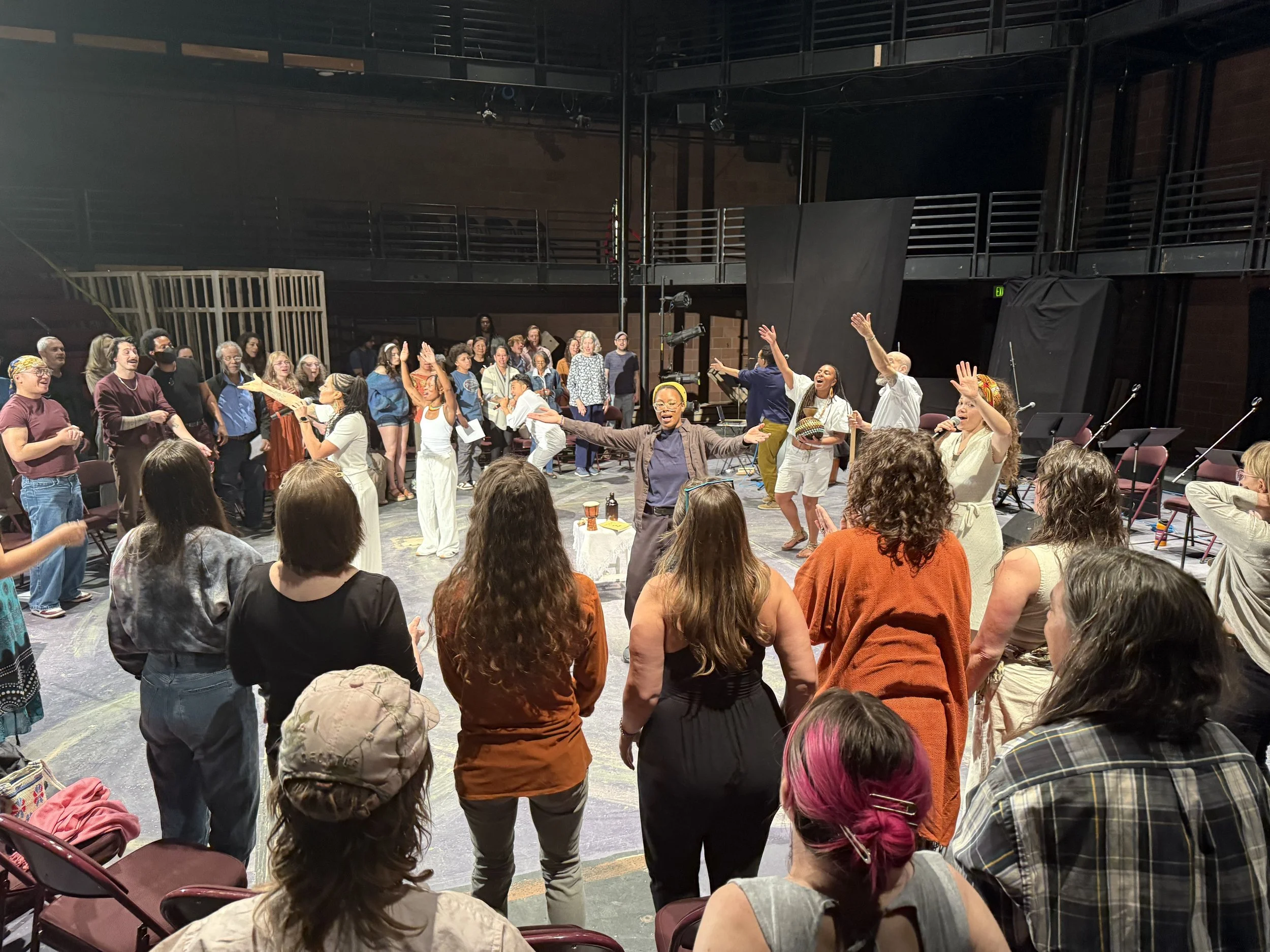
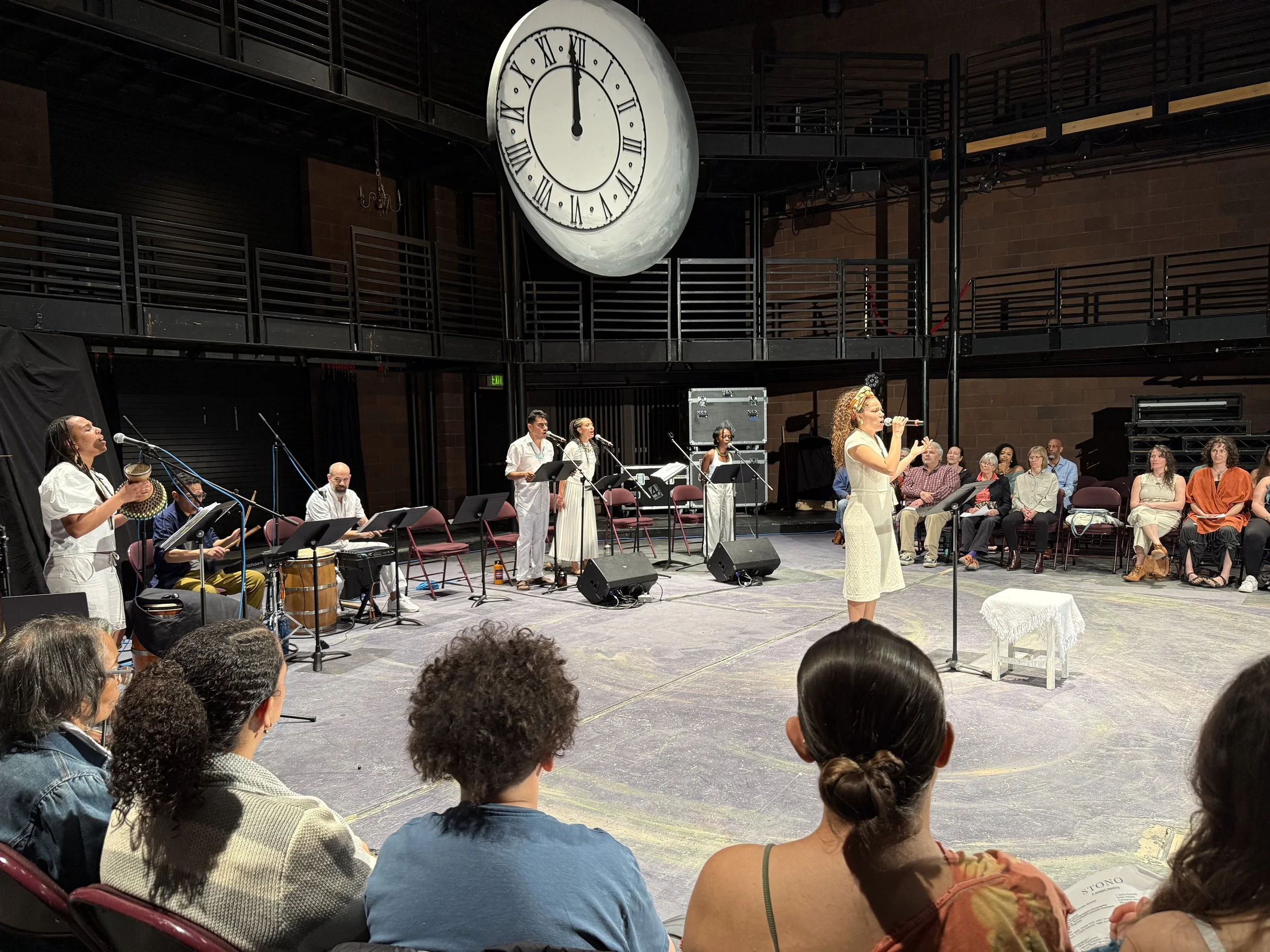
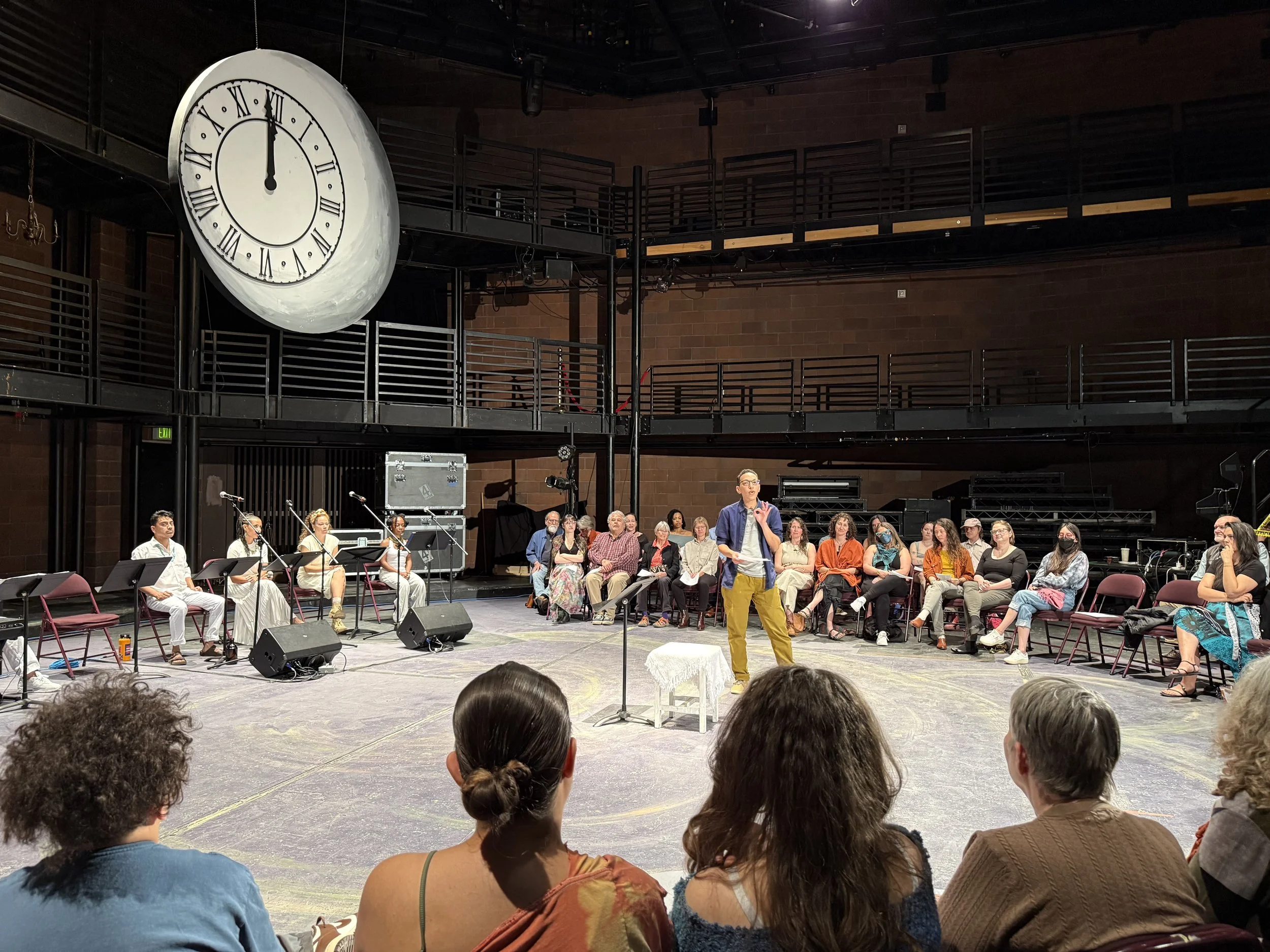
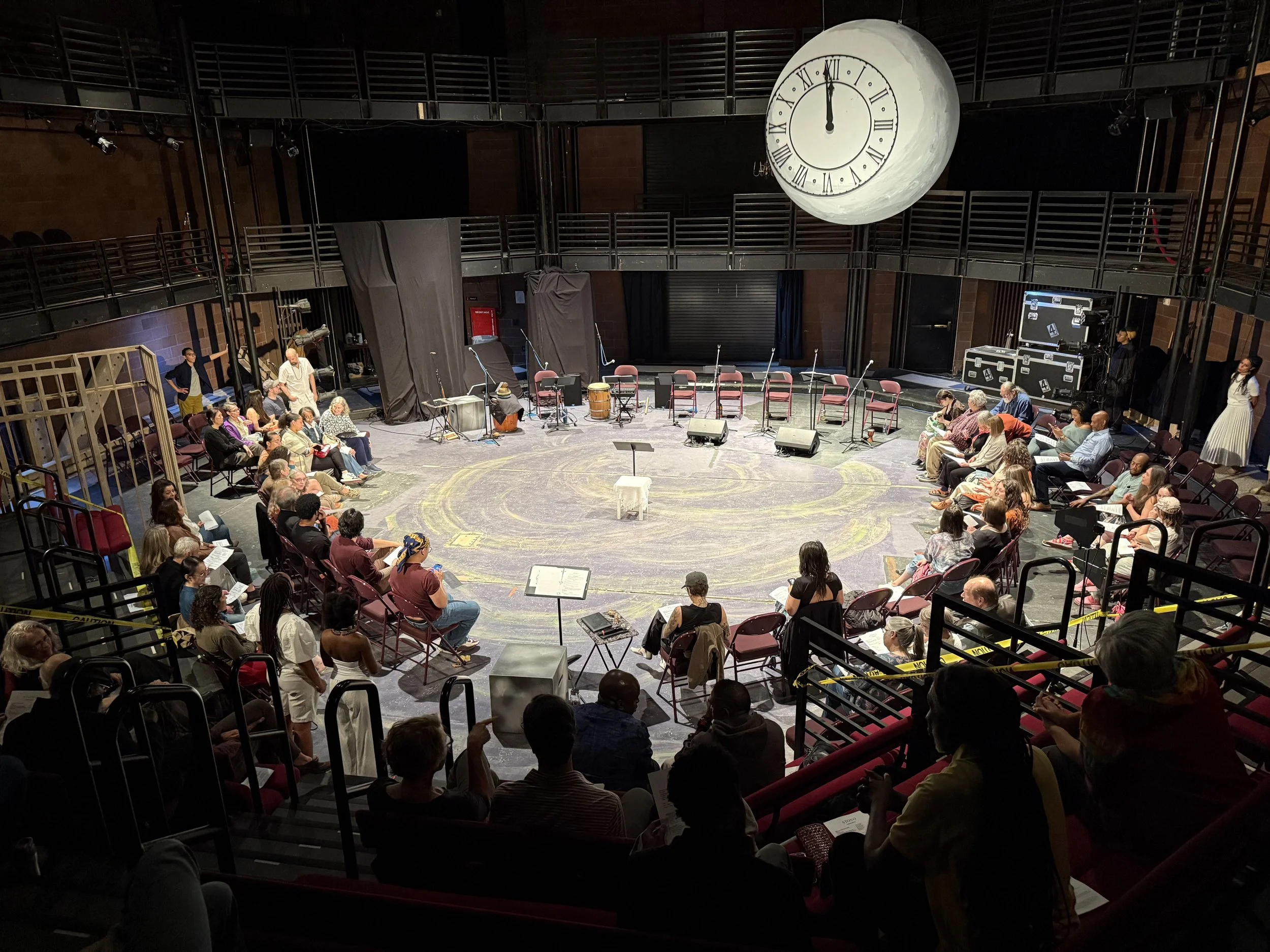
Photos from March 2026 staged reading
Development History
2027 — Control Group Productions co-production, Lead Artist in Guest Artist Producing program
2026 — Control Group Productions HOME Studio residency & staged reading
2025 — UNTITLED Musical Writers Group cohort
2025 — University of Denver, workshop
2024 — New Harmony Project residency
2024 — Start the Wave grant
2023 — Start the Wave grant
2022 — Slave Dwelling Project conference: The Stono Rebellion and the Atlantic World (Charleston, SC)
2022 — KGNU radio (Denver/Boulder, CO)
2022 — Destination Freedom podcast via the Broadway Podcast Network (online) — Listen
2022 — National Queer Arts Festival — View program | Watch video featuring post-show Q&A
2021 — Orchard Project Audio Lab residency
Co-commissioned by No Credits Productions, LLC for Destination Freedom and Queer Cultural Center for the National Queer Arts Festival. A co-production of No Credits Productions, LLC and Queer Cultural Center.