Macbeth
Oregon Shakespeare Festival
2024
I wrote the score (with live and recorded elements), created the sound design, and music directed this production. The piece was directed by the newly departed Associate Artistic Director of the company, Evren Odcikin, and featured multiple longstanding members of the OSF acting company. This production launched the company’s 2024 season and was a central feature on their main indoor stage. See the production website for full credits.
Promotional video
This production highlighted the Viking and early-Celtic cultural context of Scotland in the transition from pagan to Christian beliefs, practices, and socio-political institutions. Director Odcikin also drew on aesthetic elements of horror to highlight the intense presence of violence as political tool in the text. As a way to support and move beyond the written/spoken word, Odcikin heavily incorporated music and dance into the production, including multiple songs and instrumental music-movement sequences.
NOTE: This video was taken for rehearsal purposes. Therefore, the sound and visuals are of lesser quality.
Macbeth illustrates my general approach to creating a score and design. I conducted research on Viking and early Celtic music and spirituality and shaped a sonic aesthetic merging historical detail with specific character and narrative needs of this particular story. I created a palette that featured various folk elements—drums, modal melodies, repeating chants—amidst textures featuring virtual instruments and ambient sound. I specifically incorporated knowledge of pre-Christian, nature-based spiritual practice to bring Shakespeare’s text into a musical/ritual context appropriate to our production.
In the “War Chorus,” soldiers recount the battle in which Macbeth rose to prominence. I took the lead on adapting this section, writing and recording the music and shaping the existing text.
“War Chorus”
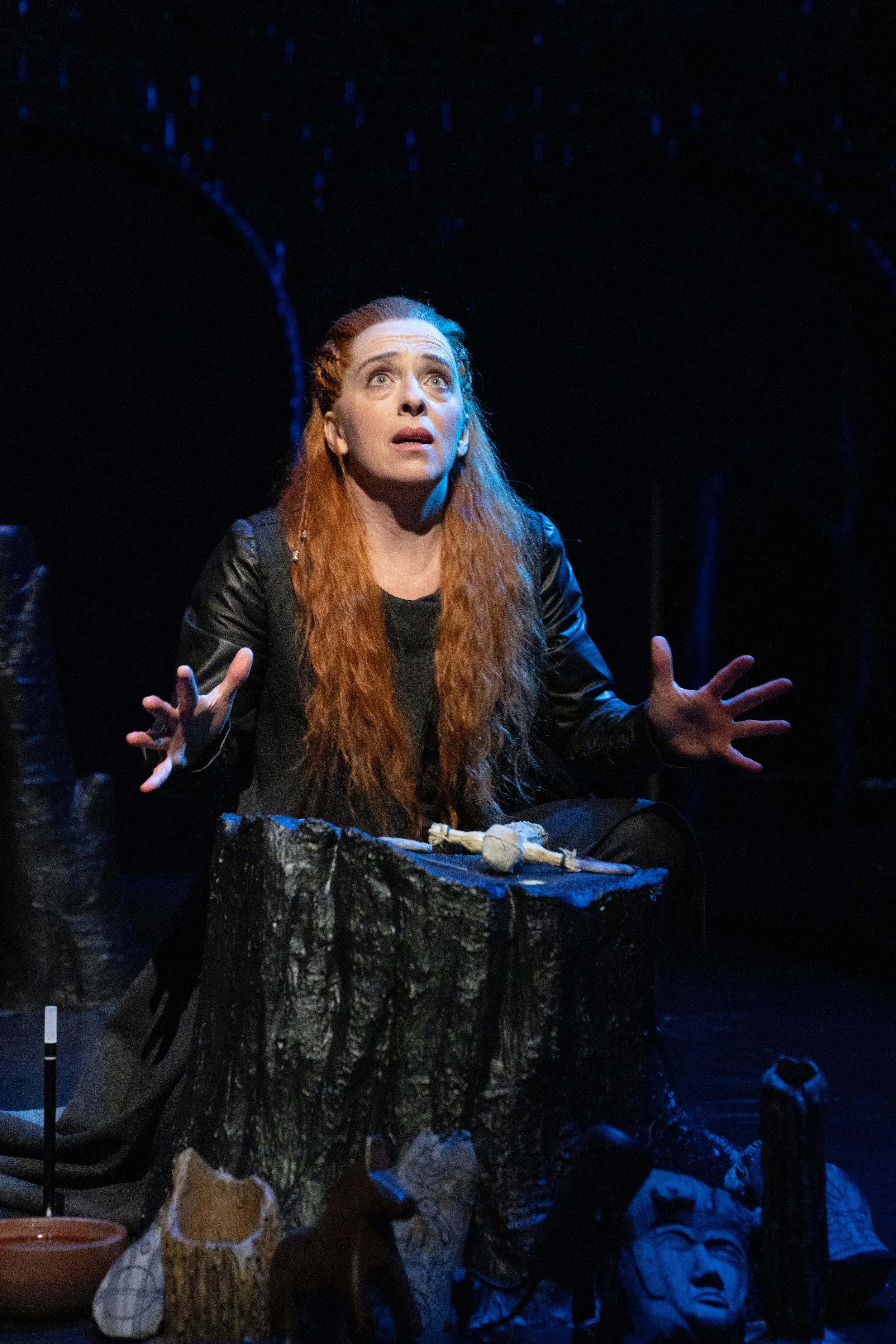
Lady Macbeth performs a grief ritual
For the live elements, I worked with the actors to learn their vocal strengths and unique qualities. I had the basic framework of the songs that I then set specifically for their voices and further develop through sessions in which we improvise and workshop versions of the musical material. Alongside the musical elements, I guided the actors in how to think about the energetic impact of their vocalizations, which in our production generally came in moments of ceremony and were specifically meant to the alter the fabric of the characters’ world.
For example, the three Witches were given a much larger role in our show and sang multiple songs. One, “The Mourning Song,” is sung in multiple versions to usher dead characters into the spirit world. This song is also sung by Lady Macbeth as she laments her recently deceased child. The text of the song is a modern Scotts Gaelic translation of the well-known opening lines of the play: “When shall we three meet again / in thunder, lightning, or in rain?”
“Hecate Incantation”
In another scene, I arranged the existing text to create a large music-movement-ritual sequence in which the Witches assist Macbeth in communing with the goddess Hecate. I took Shakespeare’s base and shaped it into a form more closely resembling a pagan ceremony, with repeated refrain and a ramp up toward an increasingly ecstatic vibe.
Reviews:
The production was reviewed positively, with several mentions of the sound and music.
“The three witches…were chilling with their blood-curdling, tribal cries and dissonant chants.” — Rogue Valley Times
“These frightful creatures [the witches] are terrifying as they sing their predictions in shrieking dissonance.” — KLCC Theater Reviews